

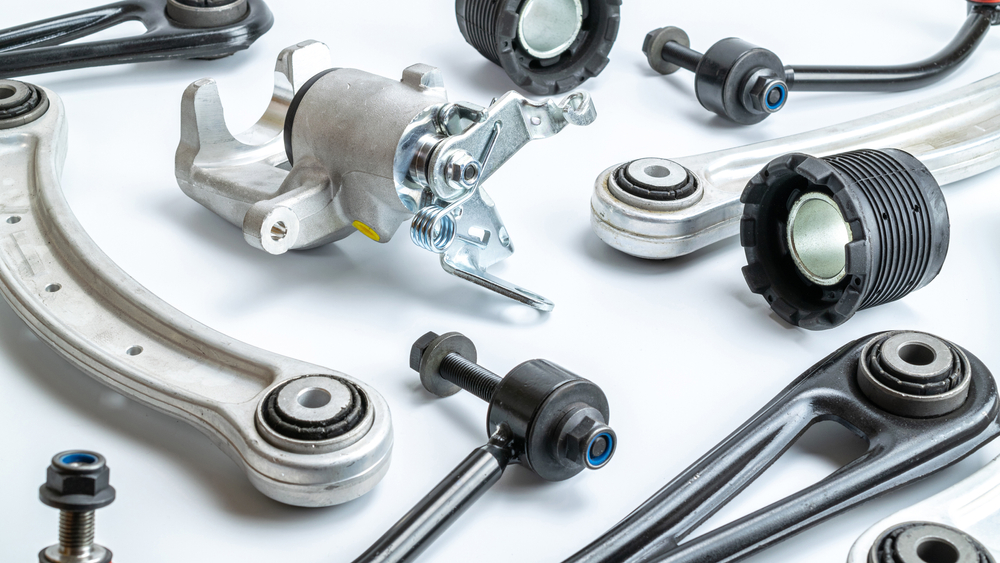
When the time comes to maintain your Ford vehicle, the choice of replacement parts is critically important. OEM parts will fit your Ford perfectly, and they’ll preserve its performance by working exactly as expected. One way to ensure original parts are used is by letting a Ford dealer service your vehicle. Buying and fitting aftermarket parts can harm your driving in various ways.
Precision Engineering and Fit
Whether they’re made by Ford’s auto parts division, Motorcraft, or supplied by one of many other trusted brands, your Ford vehicle is designed to accept OEM components. These will be precision-engineered to precise tolerances, whereas cheap aftermarket parts are often reverse-engineered less precisely, roughly fitting as many vehicles as possible.
Precision in vehicle parts is essential, as even minor discrepancies can lead to performance issues and potentially expensive damage. Whether it’s related to the engine, transmission, or braking system, each part must work harmoniously with the next and fit precisely into place. Poorly fitting parts cause accelerated wear, degraded performance, and sometimes irreversible damage to major components.
Durability and Safety
Ford parts and those of its suppliers are rigorously tested and subjected to stringent quality control. Cheap aftermarket parts don’t typically have a well-funded R&D department behind them, so they’re made with poorer materials or in a less nuanced way to maximize profits. A prime example of this is aftermarket brake pads, which are often made from substandard materials that can cause abrupt failure.
Many aftermarket parts could compromise safety, including brake, suspension, or steering parts, or passive safety equipment like seatbelts and airbags. An aftermarket ECU (Electronic Control Unit) that isn’t fully compatible can also create issues, as it oversees vital functions like airbag deployment, anti-lock braking, electronic stability control, transmission control, and critical engine tasks.
Optimum Fuel Efficiency
Various aftermarket parts can adversely affect fuel efficiency, including air filters (either through poor filtration or poor fit), exhaust systems, wider tires that increase rolling resistance, suspension lift kits, fuel injectors, fuel pumps, engine tuner chips, body kits, and spoilers. Some of these parts are designed to enhance performance, which may or may not work, but it’ll often be at the expense of fuel efficiency.
Preserve Your Warranty with a Ford Dealer
All new Fords come with a bumper-to-bumper 36,000-mile, three-year warranty, and longer for powertrains, diesel engines, and hybrid/electric unique components. You can’t invalidate these warranties merely by installing an aftermarket part, but your claim may be invalidated if that part subsequently creates problems. Avoid this hassle and potentially save money by using your local Ford center for servicing.
Contact Pohanka Ford of Salisbury in Salisbury, MD to schedule your next Ford service using OEM components.
Image via

Connect with us


